
London – On Sunday evening, the Barbican Hall was filled with an electric anticipation that seemed to hum even before the musicians stepped onto the stage. At 7.30 sharp, five figures emerged, each carrying an instrument that would help resurrect and reimagine the sound world of Astor Piazzolla, the Argentinian composer who transformed the tango from dance-hall entertainment into a sophisticated, boundary-defying art form.
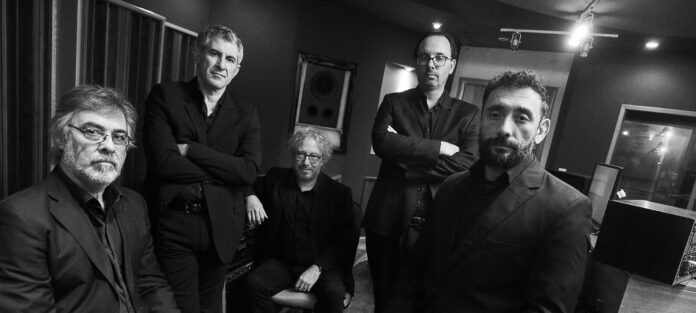
The Quinteto Astor Piazzolla, founded in 1998 by the Astor Piazzolla Foundation under the guidance of Laura Escalada Piazzolla, has spent over two decades carrying forward this musical revolution. The current line-up—each member a virtuoso in their own right—brings together the colours and textures of Buenos Aires: the melancholy cry of the bandoneon, the sinuous lyricism of the violin, the percussive bite and sweep of the piano, the steel-edged fire of the electric guitar, and the resonant heartbeat of the double bass.
From the very first piece, the musicians established an intoxicating balance between precision and abandon. This was not music polished into cold perfection—it was music that breathed. Each phrase seemed to inhale and exhale, swelling with emotion, collapsing into quiet introspection, then surging forward with irresistible rhythmic drive. The programme ranged widely through Piazzolla’s catalogue, moving from brooding, filmic landscapes to exuberant milongas that had toes tapping discreetly in the stalls.
One of the evening’s emotional high points was Adiós Nonino, Piazzolla’s elegy to his father, played here with a tenderness that seemed to suspend time. The bandoneon’s opening line unfurled like a sigh, the violin’s phrasing achingly intimate, as if speaking directly to the heart. By contrast, Libertango—reserved for the latter part of the programme—was a burst of pure kinetic energy, its syncopated rhythms and quicksilver exchanges between instruments igniting the hall.
What impressed most was the ensemble’s democratic spirit. While each musician had moments to shine in extended solos, the Quinteto’s power lies in its unity: an almost telepathic communication that allowed them to navigate sudden tempo changes and rhythmic displacements with ease. The music felt spontaneous, yet deeply rooted in a shared understanding of Piazzolla’s idiom—its tango rhythms infused with jazz harmonies, its melodic turns touched by both European romanticism and Latin-American earthiness.
Between pieces, there was little need for spoken explanation; the music itself told the stories—of Buenos Aires streets at dusk, of lovers parting at a train station, of smoky late-night cafés where the tango is danced not for an audience but for the sheer act of feeling. At times, the performance seemed to fold the vastness of the Barbican Hall into something more intimate, almost as if the audience had been transported to a backstreet club where the air vibrated with song.
The final notes brought the audience to their feet in a long, unbroken standing ovation. The players acknowledged the applause with warmth but without indulgence, offering an encore that was at once playful and poignant, sealing the night with a reminder of tango’s dual nature—its capacity to seduce, and its power to wound.
For long-time Piazzolla devotees, the concert was a reaffirmation of his genius; for newcomers, it was an initiation into a musical language unlike any other—one that demands both technical mastery and an openness to vulnerability. Thanks to the artistry of these five musicians, Piazzolla’s legacy did not feel like a relic of the past but something urgent, alive, and entirely of the present moment.