The question before the answer
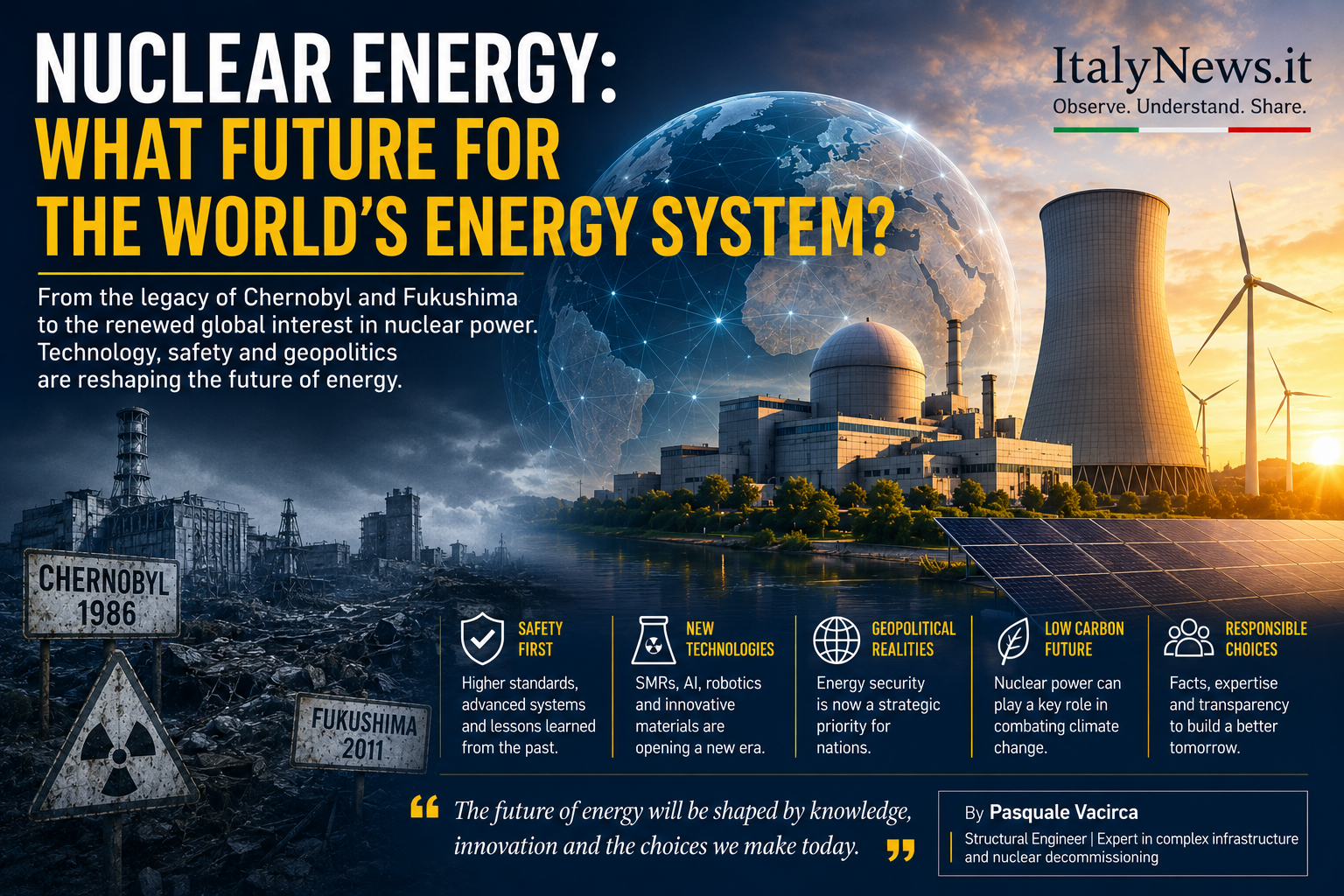
For almost forty years, the name Chernobyl has been associated with fear, risk and public distrust towards nuclear energy.
In 2011, the Fukushima Daiichi disaster in Japan brought nuclear safety once again to the centre of the global debate.
Those events profoundly influenced public opinion and shaped energy policies in many countries.
Yet today, in a world facing climate change, increasing electricity demand, digital transformation, the rapid expansion of artificial intelligence and new geopolitical tensions, nuclear energy has returned to the international agenda.
The question is therefore unavoidable: Can nuclear energy still play a role in the future of the global energy system?
To understand the present, we must first understand the past.
From nuclear expansion to the lessons of Chernobyl
The development of nuclear reactors experienced extraordinary growth during the second half of the twentieth century.
From the first experimental applications in the 1950s, the number of operational reactors worldwide grew to almost four hundred before the Chernobyl accident in 1986.
A nuclear power plant is, from an industrial perspective, a thermal power station in which heat is generated through the process of nuclear fission using materials such as uranium and, in some cases, plutonium.
The heat produced is used to generate steam, which drives turbines for electricity production.
One of nuclear energy’s main advantages is its ability to provide large amounts of continuous and reliable electricity, with very low direct carbon emissions compared with coal, oil or gas-fired power plants.
At the same time, nuclear technology requires extremely high initial investments, long construction periods and rigorous management throughout the entire lifecycle of the plant: from design and construction to operation, radioactive waste management and final decommissioning.
Chernobyl and Fukushima: two events that changed history
The Chernobyl accident of 1986 represented a turning point in the history of nuclear energy.
Beyond its tragic human and environmental consequences, it profoundly changed public perception of nuclear technology and led many countries to reconsider their energy strategies.
In 2011, the Fukushima Daiichi accident, caused by a major earthquake followed by a tsunami, reopened the worldwide debate on nuclear safety.
However, these events did not stop scientific research.
On the contrary, they accelerated the development of new safety standards, advanced control systems and technological solutions designed to further reduce risks.
Today, the design of a modern nuclear facility requires expertise from multiple disciplines, including nuclear engineering, structural engineering, mechanical and electrical engineering, geotechnical and seismic engineering, automation, information technology, robotics, cybersecurity and artificial intelligence.
The new frontier: safety, efficiency and modular reactors
Technological progress has led to the development of SMRs (Small Modular Reactors), smaller and more flexible reactors compared with traditional large-scale nuclear plants.
With capacities generally up to around 300 MW, SMRs are among the most studied technologies for the future of nuclear energy.
Their modular approach allows several components to be manufactured in controlled industrial environments, potentially reducing construction complexity and improving flexibility.
Commercial deployment of SMRs is still at an early stage, but many countries consider them a strategic option for future energy systems.
At the same time, research continues to address one of the most debated issues surrounding nuclear power: radioactive waste management.
Improving efficiency, reducing waste volumes and developing safer fuel cycles remain key objectives for the future.
Energy and geopolitics: the return of energy security
The renewed interest in nuclear power cannot be explained only by technological progress.
The global energy landscape has changed dramatically in recent years.
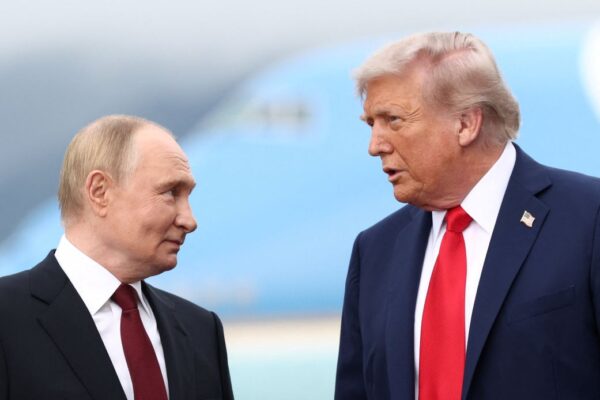
The war in Ukraine, international tensions, instability in oil and gas markets, economic sanctions, attacks on energy infrastructure and strategic competition between major powers have brought a fundamental concept back to the centre of political debate: energy security.
Energy is no longer only an economic or environmental issue.
It has become an instrument of foreign policy, national security and industrial competitiveness.
The ability of a country to produce stable and predictable energy is now considered a strategic asset, reducing vulnerability to international crises and market volatility.
During COP28 in 2023, more than twenty countries signed the Declaration to Triple Nuclear Energy, recognising the potential role of nuclear power in reducing emissions and strengthening energy security.
Looking forward without forgetting the past
Today, several countries are investing again in nuclear energy: from the United States and the United Kingdom to China and Russia, as well as emerging nuclear nations such as Turkey, Egypt and Bangladesh.
This does not mean that nuclear power will be the only solution to future energy challenges.
The energy system of tomorrow will likely be based on a combination of technologies: renewable energy, energy storage, smart grids, efficiency measures and, in some countries, nuclear power.
History shows that no technology is without risks.
But history also shows that knowledge, research and innovation can transform past mistakes into opportunities for building better solutions.
The nuclear debate will continue to generate different opinions and perspectives.
For this reason, it must be addressed through scientific evidence, verified data and critical thinking, avoiding both unconditional rejection and uncritical enthusiasm.
Because today’s energy choices are not only about the electricity we consume.
They are about the development model, security and future of the next generations.
About the Author
Pasquale Vacirca is a Structural Engineer with more than thirty years of experience in civil, structural and industrial engineering projects across the United Kingdom and Europe.
Throughout his professional career, he has developed expertise in complex infrastructure projects, structural safety and nuclear decommissioning activities.
He is the founder of PV Consulting, a UK-based structural engineering consultancy, a member of FORMA, an international network bringing together architects, developers, engineers, planners and designers focused on the transformation of places, and collaborates with VERTIPORTS Enterprise Ltd on the development of infrastructure for Advanced Air Mobility.
The views expressed in this editorial are the author’s personal reflections and do not represent the position of any company, organisation or institution with which he collaborates.