

WASHINGTON DC – In recent weeks, international debate has not only played out at the United Nations or in fragile Middle East negotiations. It has also arrived on the soccer pitch. UEFA, Europe’s governing body for the sport, is weighing whether to suspend Israel from its competitions, following growing pressure from national federations in the wake of the Gaza conflict. Such a move could pave the way for FIFA to follow suit, effectively sidelining Israel from the 2026 World Cup.
Unexpected leverage for Trump
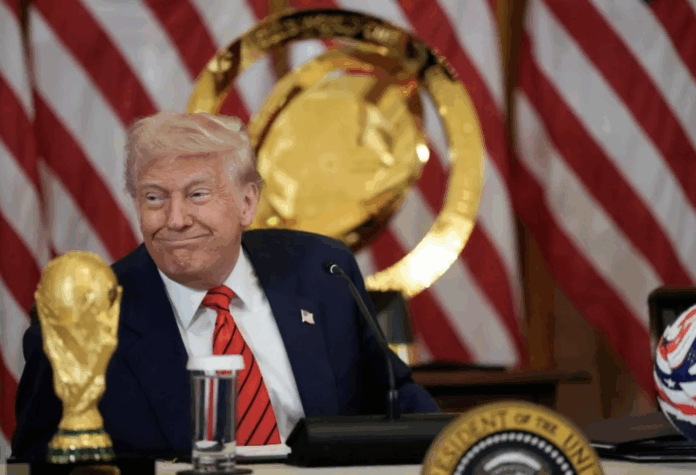
At the center of this storm is Donald Trump, who has stumbled into a unique position of influence. As host nation for next summer’s World Cup, the United States suddenly has a decisive voice. That gives Trump an unusual form of diplomatic leverage—one rooted not in military or economic power, but in the symbolism of sport.
The administration has already signaled it will oppose any effort to exclude Israel’s national team, intertwining the president’s foreign policy instincts with the politics of global soccer.
Mixing sports with statecraft
Trump has long blurred the line between diplomacy and spectacle. He has threatened tariffs over European wine, floated deals linking Chinese tech cases to trade talks, and more recently suggested Russia could rejoin international soccer as an “incentive” to end its war in Ukraine. Now, with the World Cup approaching, his administration appears ready to wield another tool: the power to control who enters the United States.
Countries such as Iran and Brazil already feel the impact. Iranian fans are expected to be blocked from traveling next summer, while Brazilian officials fear broader visa restrictions could be used as leverage in ongoing trade disputes.
The Infantino connection
Trump’s influence also rests on his close relationship with FIFA president Gianni Infantino. The two men have met repeatedly, cultivating a rapport that links the success of the tournament with Trump’s broader political agenda. Infantino needs smooth cooperation from Washington to deliver the World Cup, while Trump sees the tournament as an unparalleled stage to showcase American power.
Israel’s unsettled place
Israel’s soccer journey has never been straightforward. Since its founding, the country has struggled to find a permanent home in the international system, joining UEFA in the 1990s after decades of regional boycotts. But the war in Gaza has reignited political tensions. Israeli teams have been forced to host matches in neutral venues abroad, often in Hungary, and several European clubs have refused to play them altogether.
If UEFA moves forward with a suspension, Israel would face an isolation reminiscent of Russia’s after the invasion of Ukraine—a symbolic and practical setback at the very moment it is competing for a World Cup berth.
A game beyond the game
For Trump, the 2026 World Cup offers something larger than a sporting triumph. It provides a new instrument to project American influence, one that blends pageantry with politics. The tournament will be watched by billions, and every decision about who competes and who attends will carry geopolitical weight.
Soccer may not decide wars or peace treaties. But in Trump’s hands, it has become part of the broader contest over America’s role in the world—and over Israel’s future on the global stage.