



City of London – The Alps are a border, but also a bridge. A geographical hinge that separates Italy from France and at the same time unites them through centuries of history, migration, battles, trade, dreams.
Today, this same mountain arc becomes the narrative thread linking two fundamental chapters of modern Olympic history: Milan–Cortina 2026 and France 2030.
Two consecutive editions of the Winter Games, just a few kilometres apart yet distant in their visions of the world.
One is born from a desire for identity-driven redemption; the other from administrative continuity. One stretches across a vast and diverse territory; the other is concentrated in a compact, already-prepared geography. One is lyrical, the other rational.
The Italy That Tells Its Story: Milan–Cortina 2026 – A project born from the desire to reclaim centre stage.
 Milan–Cortina is a candidacy Italy embraced with collective enthusiasm.
The 2019 victory on the international stage was not only a sporting–diplomatic success, but a kind of liberation: Italy was hosting a major event again after years of withdrawals, economic crises, and fears of no longer being up to the task. And it was doing so in a sector—mountain tourism—that had historically lacked overall governance, a unified purpose, a “Mountain Italy” project capable of promoting not just altitude, but a lifestyle. A governance model enabling scalable logic and unified promotion on global markets—something neighbouring France, Switzerland, and Austria had been doing for decades.
Tourism geographer Matteo Corsi remembers the atmosphere well: *“The Italian bid worked because it told the story of a country that wanted to feel capable again. It wasn’t looking for monumentality, but recognisability.”
Indeed, the Italian dossier was built on a narrative blending modernity and tradition: Milan with its economic dynamism, Cortina with its Hollywood glamour and social aura, and the Dolomites’ serene beauty that has enchanted the world for decades.
But every dream has its price. Geographical complexity quickly turns into political complexity. Autonomous Regions and Provinces, municipalities, two major Regions (Lombardy and Veneto), a central Government often wavering, and an organising committee exposed to pressures and expectations.
A member of the Organising Committee, requesting anonymity, explains: “The Games are a gigantic prism: everyone sees their own interests inside it. Getting everyone to agree was like conducting an orchestra of soloists.”
The Cortina bobsleigh track—awaited, contested, revised, downsized—became the perfect metaphor for this fragmentation. It is not just a sporting facility: it is a symbol. But compared to the Olympic dossier, its construction costs doubled, calling into question future sustainability. Local frictions generated delays, and delays generated additional costs. Today, the track is a reality and, despite the turbulence, the project’s appeal remains intact.
Milan–Cortina is not only a sporting project: it is a cultural narrative.
Sports sociologist Luca Perrone observes: “Italian Olympics have always been emotional events: Rome ’60 marked the birth of modern Italy. Turin 2006 marked Italy’s European return. Milan–Cortina 2026 wants to be the synthesis: beauty, efficiency, identity.”
The ceremonies planned in the Arena of Verona and San Siro add a powerful symbolic layer: tradition and contemporaneity in dialogue.
Milan brings innovation; Cortina brings natural scenography. Lombardy offers economic stability; Veneto offers cultural rootedness.
The result is a complex fresco, but profoundly Italian.
On the Other Side of the Alps: France and the 2030 Winter Olympics.
 France, set to host the 2030 Winter Olympics, is a country that has just reinvented the Olympic model, as it did with Albertville ’92.
When France hosted the Paris 2024 Summer Games, the world witnessed an edition that was innovative, sober, almost “post-modern” in its effort to avoid excessive waste.
It is no surprise, then, that the French bid for the 2030 Winter Games was welcomed with enthusiasm and confidence. Unlike Italy, France proposes a concentrated, precise, almost surgical project. No geographical dispersion, no facilities to build from scratch, no grand new architecture. Environmental lead for the bid, Sophie Berthier, puts it plainly: “The challenge is not to add, but to subtract. Less concrete, fewer kilometres, fewer margins for error.”
The chosen locations—Nice, Serre-Chevalier, Méribel—are already prepared. The TGV network offers fast, low-impact connections. The country already has, so to speak, a well-oiled machine. And it is not far-fetched to say that the “cousins” across the Alps excel where Italy often stumbles: governance.
Winter Sports in a Climate change World.
Winter sports are among the most threatened by climate change.
Anyone who “eats snow”—those whose livelihoods depend on winter tourism—knows that below 1,500 metres, by mid-century, natural snowfall will become increasingly rare. Planning the Olympics, or even just ski lifts and slopes, while ignoring this reality would be irresponsible. France built its dossier on this awareness: higher altitudes, lower dependence on artificial snow, low-emission transport, contained budgets.
What Italy (or rather many of its Regions, since tourism and investment policy are decentralised) narrates as a dream to be fulfilled, France describes as a “procedure”.
The Alps (and, for Italy, the Apennines) are not just high-altitude landscapes—*and in any case, what altitude? The altitude-centred approach is entirely misguided! They are local cultures, infrastructures, economies, ecosystems. The Olympics cut across them like a scalpel, revealing deep differences:
Italy experiences its mountains as cultural, identity-rich, almost mythological places.
France sees them as territories to administer, protect, and render functional.
Urban planner Carlo Nava summarises it poetically: *“For Italians, the Alps are a novel. For the French, they are a technical manual.”*
Moreover, many French resorts operate with a level of marketing efficiency—meaning not just promotion, but product creation, pricing, distribution, human factors, governance—that Italian resorts, still bound to local parochial logics, can only dream of. And the difference is visible on international markets.
In Italy, every discussion becomes a political arena. Every cost raises questions that generate delays; every delay fuels controversy, often from the same people who caused it.
National media follow Milan–Cortina with intense, at times anxious attention. In France, the perception is the opposite: the 2030 Olympics are viewed as the natural continuation of the 2024 success. The public does not fear waste or delays. There is trust.
American journalist Lisa Donnelly, who has followed many bids over the last twenty years, notes: *“Milan–Cortina tells the story of a country trying to convince itself. France 2030 tells the story of a country trying to convince the world.”
Olympic Legacy: What Will Truly Remain?
Milan–Cortina could become a catalyst for revitalising the entire Alpine arc: tourism, mobility, digital infrastructure, internationalisation. If managed well, these Olympics could transform the tourism destiny of three regions. If mismanaged, they will be remembered only for construction sites.
And it is ironic that in Cortina d’Ampezzo—after decades during which residents and visitors complained about outdated tourism offerings and infrastructure—now that important works are finally underway, everyone still complains about the construction. Perhaps the works should have been scheduled more thoughtfully, but that is another matter…
France’s legacy will be one of method, governance, and climate-aware planning. Compared to Italy, France will deliver to the world a paradigm: “light”, sustainable Games managed like a corporate process. France is attempting to define the standard for future Olympics—difficult to argue against that.
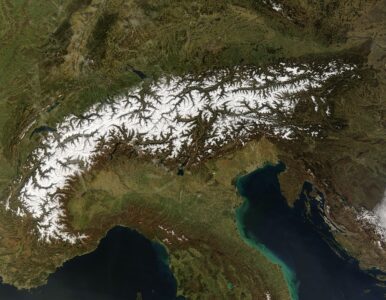 Two Countries, Two Challenges, One Mountain.
The Olympics are the last great global ritual, perhaps the final place where the world still meets “in person”. Milan–Cortina 2026 and France 2030 are not merely events: they are two answers to the same question: “How do you organise a great dream in a delicate mountain environment that has less and less room for dreaming?
Italy responds with heart, imagination, and the art of making the improbable possible.
France responds with reason, administrative discipline, and the ability to make the exceptional routine.
And the Alps, unmoving, watch it all. They know the future of sport will not be decided only on snowy slopes, but in the ideas each nation has the courage to put forward.
Political scientist Antoine Lefèvre sums it up: “France capitalised on the credibility of Paris 2024. It is as though it told the IOC: trust us, we know how to do this.”
Will Italy be able to do the same after Milan–Cortina 2026?
The winner will not be the one hosting the most spectacular Games.
The real victory will be leaving a legacy that speaks to future generations—perhaps learning part of the lesson that “cousins” might wish to learn from one another.
Francesco Comotti
trieste@mediaperformance.it