

1️⃣ Greenland: from Periphery to Strategic Hub
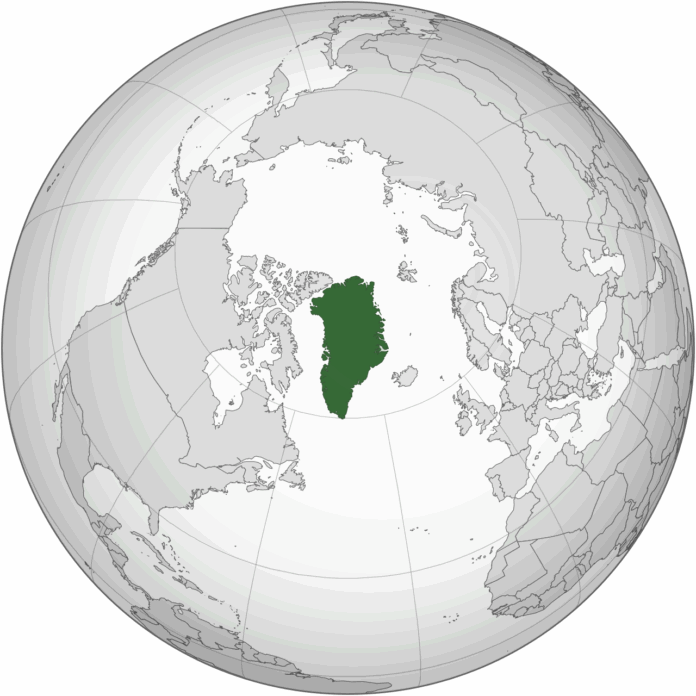
For decades, 🇬🇱 Greenland has been perceived as a remote extension of the Western world, marginal in global power dynamics. This perception arises from a cartographic distortion: traditional maps place the island at the edges of the inhabited world, whereas a polar azimuthal projection 🗺️ reveals a completely different reality.
From this perspective, 🇬🇱 Greenland emerges as a central node between North America 🇺🇸, Europe 🇪🇺, and Russia 🇷🇺, positioned along the shortest axis connecting Washington to Moscow. It is not a marginal territory—it is a geographically critical bridge.
2️⃣ The Arctic ❄️ as a New Competition Space
🇺🇸 U.S. ambitions over 🇬🇱 Greenland fit into a broader context: the progressive militarization of the Arctic ❄️. The melting ice is not just a climate phenomenon but a strategic factor that opens:
-
new maritime routes 🚢
-
more direct air corridors ✈️
-
possibilities for advanced military projection 🛡️
The 🇺🇸 U.S. considers it essential to maintain control of the northern flank of the American continent to ensure security and deterrence against 🇷🇺 Russia and 🇨🇳 China.
3️⃣ The Military Factor: Defense and Deterrence
U.S. presence 🇺🇸 in 🇬🇱 Greenland is not theoretical. The Pituffik (former Thule) Base 🛡️ represents one of the pillars of North American defense:
-
early warning radar 📡
-
ballistic missile monitoring 🚀
-
surveillance of the Arctic and circum-polar space ❄️
Strategically, 🇬🇱 Greenland is an advanced deterrence platform against 🇷🇺 Russia, whose main nuclear assets are located in the northern Arctic.
4️⃣ Trump 🇺🇸 and the Verbalization of a Strategic Interest
U.S. interest 🇺🇸 in 🇬🇱 Greenland is not limited to the 2019 remarks. In recent months, Donald Trump 🇺🇸 has repeatedly emphasized the island’s strategic importance, calling it crucial for national security and for global competition with 🇷🇺 Russia and 🇨🇳 China.
It is not just a personal issue: influential members of his circle, via social media 📱 and public statements 📰, have reiterated the need to consolidate American 🇺🇸 influence over the island, using language that some critics interpret as political pressure on Danish and Greenlandic sovereignty. These signals confirm that the issue is not a presidential whim but a historically rooted American strategy, traditionally implicit, now made explicit.
However, it should be noted that there are no formal decisions on annexation or occupation: the statements fall within political and strategic debate, and 🇬🇱 Greenland remains formally under Danish 🇩🇰 sovereignty. What changes is the symbolic and political weight of these statements, reinforcing the perception of 🇬🇱 Greenland as a key security and strategic hub for 🇺🇸 U.S. interests.
5️⃣ Roosevelt 🇺🇸, Nationalism, and Strategic Continuity with Trump 🇺🇸
To better understand U.S. 🇺🇸 ambitions over 🇬🇱 Greenland and in the Arctic ❄️, it is useful to recall the strategic thought of Theodore Roosevelt 🇺🇸, 26th President of the United States (1901–1909) — not to be confused with Franklin Delano Roosevelt 🇺🇸, 32nd President.
Roosevelt was a firm advocate of a new global role for the 🇺🇸 USA, based on strong nationalism and the idea that the country should exercise active leadership beyond continental borders. His policy was characterized by:
-
direct engagement in global affairs 🌐, well beyond the Western Hemisphere
-
a controlled imperialist vision 🛡️, aimed at consolidating the 🇺🇸 USA’s global position
-
the construction of strategic and military infrastructures (e.g., the Panama Canal 🌉 and the “Great White Fleet ⚓”) as instruments of power projection
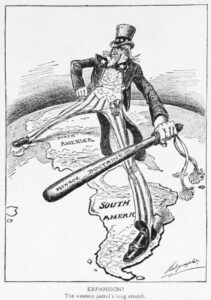 Unlike the Monroe Doctrine (1823) 🇺🇸, which limited American influence to the American continent and protection against European 🇪🇺 interference, Roosevelt implicitly extended the concept: 🇺🇸 USA could not only defend the Western Hemisphere but also act globally to protect their strategic interests 🌐.
In this sense, Donald Trump 🇺🇸’s approach to 🇬🇱 Greenland and the Arctic ❄️ shows a surprising strategic continuity with Roosevelt 🇺🇸: Trump also emphasizes the need to preserve and expand the global projection of U.S. power 🇺🇸, beyond the traditional continental sphere. However, the method is different: Trump does not build permanent infrastructures or institutions but relies on diplomatic pressure, public statements 📰, and immediate tools 🛡️ to reinforce U.S. strategic primacy.
In summary, U.S. 🇺🇸 interest in 🇬🇱 Greenland can be seen as a contemporary example of Rooseveltian 🇺🇸 strategic nationalism, prioritizing global power projection 🌐 and the protection of American interests, far beyond the traditional Monroe Doctrine 🇺🇸.
 by Riccardo Cacelli
r.cacelli@uam-vertiports.com